


The Premium Alternative: Why Waste Textiles Are Emerging as a High-Grade Fuel for Cement Kilns
In the global push for decarbonization, the cement industry is steadily upgrading its Alternative Fuel (AF) strategies. While Municipal Solid Waste (MSW) has long been the primary volume source for Refuse Derived Fuel (RDF), operators across Europe and Southeast Asia are increasingly shifting their attention toward higher-quality and more controllable feedstocks.
Among them, waste textiles are emerging as a high-grade alternative fuel option.
Compared with conventional MSW- or C&D-based RDF, waste textiles offer a distinct combination of fuel stability, chemical compatibility, and process efficiency, making them particularly attractive for cement plants seeking to increase Thermal Substitution Rates (TSR) without compromising kiln stability or clinker quality.

For kiln operators, fuel consistency is just as critical as fuel quantity. MSW-based RDF often exhibits wide fluctuations in moisture content and calorific value, which can destabilize precalciner temperatures and complicate combustion control.
By contrast, well-sorted, low-moisture waste textiles can deliver a relatively high and stable calorific value. Under controlled conditions, waste textile-derived fuels typically achieve a Lower Heating Value (LHV) in the range of 4,000–5,000 kcal/kg, significantly outperforming mixed MSW-based RDF.

This higher and more predictable energy density supports more precise combustion control and contributes to higher TSR strategies—often in the range of 20–40%—when integrated into a properly designed AF system. In comparison, general MSW-derived RDF is more commonly associated with TSR levels of around 10–15%, depending on kiln configuration and fuel mix.
2. Favorable Chemical Profile and Kiln Compatibility
One of the main constraints on increasing AF usage in cement kilns is the presence of undesirable elements—particularly chlorine and sulfur—which can lead to corrosion, buildup in the preheater tower, and operational instability.
Compared with the heterogeneous composition of MSW or renovation waste, waste textiles typically exhibit lower and more predictable chlorine content, provided that appropriate upstream sorting is applied. They are also largely free from inert contaminants such as stones, glass, and metals.

This relatively “clean” chemical profile reduces the risk of kiln system disturbances, supports long-term equipment integrity, and helps minimize the operational challenges associated with chlorine circulation and buildup.
3. Streamlined Processing and System Simplicity
Historically, waste textiles were considered difficult to process due to their tendency to wrap around rotating equipment. Advances in shredder design and torque management, however, have significantly mitigated these challenges.
Compared with MSW or C&D waste, waste textiles generally exhibit a more homogeneous physical composition, allowing for simplified processing flowsheets and reduced reliance on complex multi-stage sorting systems.

In suitable applications, waste textiles can be processed to sub-50 mm particle sizes in a single shredding stage, reducing both capital expenditure and operational complexity. Harden’s one-step shredding solutions demonstrate how modern equipment design can enable:
· Reduced CAPEX by eliminating the need for multiple crushing and screening stages
· Lower OPEX through simplified material flow, reduced energy consumption, and minimized maintenance downtime
Such streamlined processing configurations are particularly attractive for cement plants seeking to integrate dedicated textile-based SRF lines alongside existing AF systems.
4. Economic and Environmental Return on Investment
The adoption of textile-based Solid Recovered Fuel (SRF) is not only a technical decision but also an economic one. Under increasingly stringent carbon pricing mechanisms—such as the EU Emissions Trading System (ETS)—waste textiles often demonstrate a favorable carbon reduction profile, depending on their biogenic content and the applicable accounting methodology.
In practical terms, substituting coal with textile-derived SRF can deliver substantial CO₂ reduction benefits while lowering fossil fuel dependency. In cement kiln environments operating at approximately 1,450°C, waste textiles are fully thermally treated, with inorganic residues safely incorporated into the clinker matrix, without introducing additional hazardous residues into the system.
Leading cement groups have already reported significant cost savings from optimized AF portfolios, with individual production lines achieving multi-million RMB annual savings through reduced coal consumption and increased alternative fuel utilization.
As the cement industry advances toward its net-zero objectives, the role of high-quality, controllable alternative fuels will continue to expand. Industry estimates suggest that large-scale adoption of waste textiles—potentially reaching several million tons per year—could be achievable in China in the coming years, provided that appropriate collection, sorting, and processing infrastructure is established.
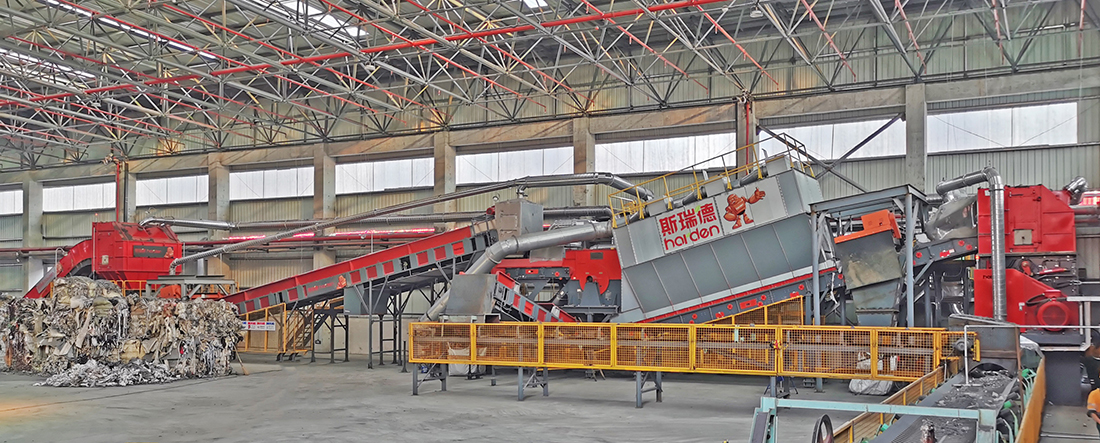
For cement plants aiming to increase TSR while minimizing operational complexity and chemical risk, waste textile-derived fuels are no longer a niche option but a strategic component of advanced AF systems. Harden is committed to supporting this transition with robust, purpose-built shredding technologies designed to maximize fuel quality, system reliability, and overall project economics.
