

Beyond Disposal: Transforming MSW into High-Quality AFR Industrial Fuel

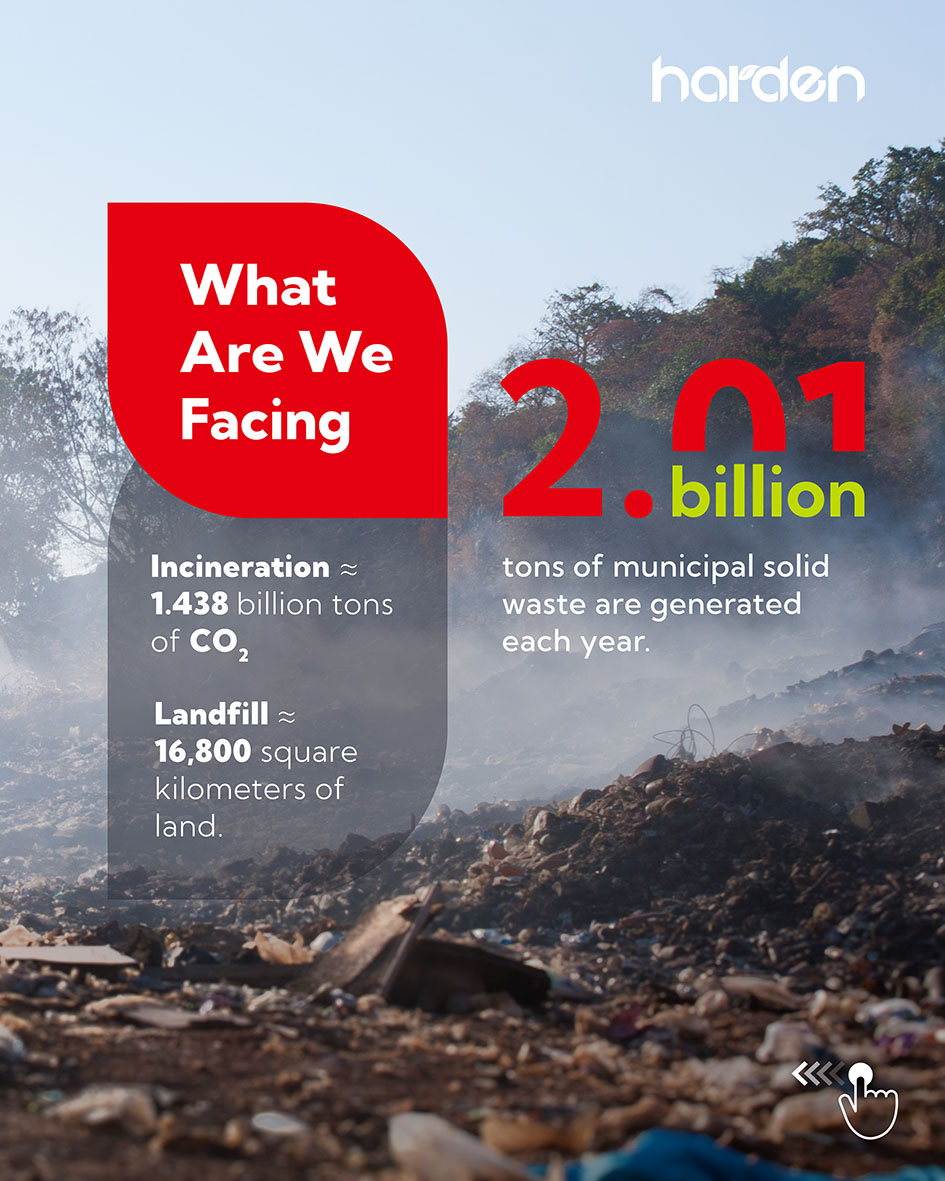
With global municipal solid waste (MSW) generation exceeding 2 billion tons annually, traditional disposal methods—landfilling and mass-burn incineration—are becoming unsustainable due to land scarcity, carbon mandates, and public pressure.
In this context, AFR (Alternative Fuels and Raw Materials) technology emerges as a practical, scalable solution. It transforms MSW from a sanitation challenge into a strategic energy and material resource. By selectively extracting and processing the combustible fraction of municipal waste, AFR enables industries to partially replace fossil fuels with waste-derived energy while reducing carbon emissions.
Global MSW Challenges & AFR Adoption
China: From Mass Disposal to Resource Valorization
China generates over 300 million tons of MSW annually, creating mounting pressure on landfills and energy recovery systems. To address this, high-calorific fractions of waste are separated and converted into AFR for co-processing in cement kilns and thermal power plants.
This approach reduces fossil fuel dependency, maximizes the thermal value of urban waste, and aligns with China’s carbon-neutrality and zero-waste city initiatives.
Europe: Setting the Quality Standard
Europe’s strict landfill bans, SRF/RDF protocols, and high environmental standards have created a mature market where fuel quality is paramount.
Advanced cement plants here achieve high Thermal Substitution Rates (TSR), and technology ensuring precise separation, chlorine and sulfur control, and calorific stability is essential.
In Europe, converting MSW into certified industrial fuel satisfies both environmental mandates and economic objectives.
Southeast Asia: The “Waste-for-Coal” Solution
Rapid urbanization across Southeast Asia has resulted in surging MSW volumes and rising energy costs. Countries such as Indonesia, Thailand, and Malaysia are integrating AFR into national waste management and energy strategies.
By transforming MSW into industrial fuel, these nations alleviate landfill pressure, supply local industries with cost-effective alternatives to coal, and contribute to a circular economy.
The Americas: Compliance-Driven Utilization
In North and Latin America, rising landfill tipping fees and ESG commitments are driving waste management toward high-value utilization. AFR systems are transforming municipal waste into industrial-grade fuel, enabling corporations to meet sustainability targets while reducing operational costs and promoting responsible resource management.
The Harden Solution: Precision Engineering for MSW
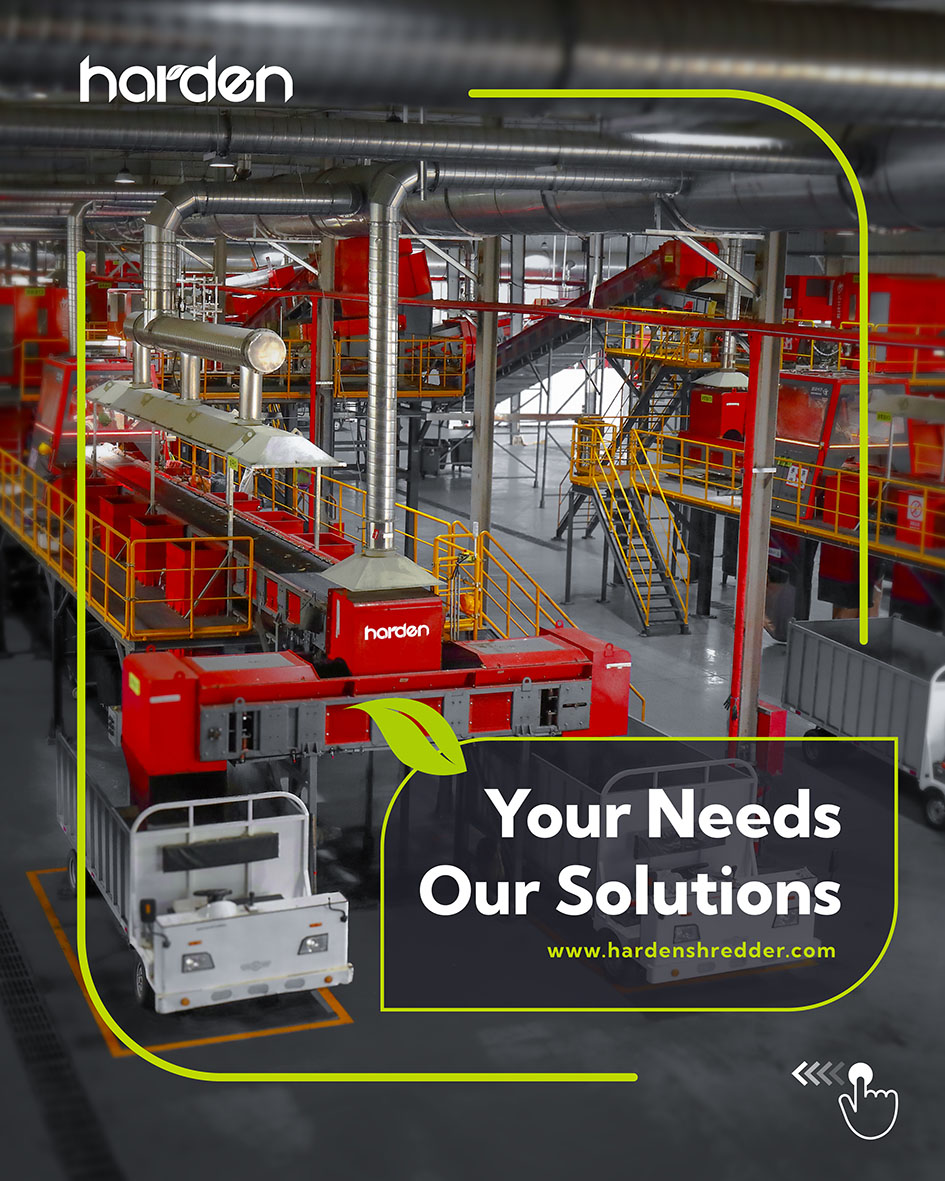
Processing MSW is inherently challenging due to its high moisture content and heterogeneous composition. Harden Machinery provides a robust, closed-loop AFR preparation system designed to handle these complexities with precision.
The Process: A multi-stage sequence combining high-torque shredding, screening, magnetic separation, and air classification (wind shifting). This effectively removes inert materials such as metals, glass, and sand, while enriching high-calorific combustible fractions.
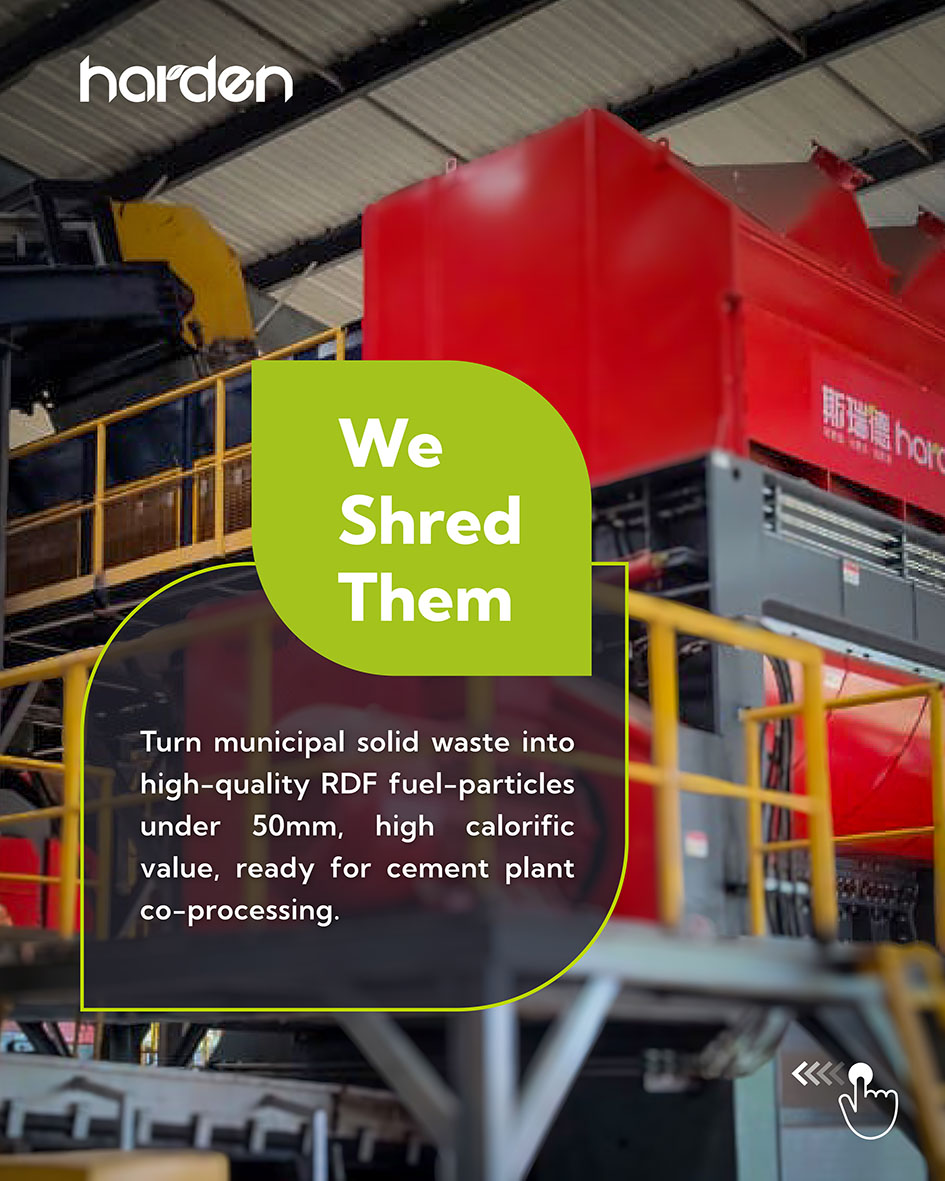
The Output: Harden systems consistently produce AFR/RDF with calorific values exceeding 3,000 kcal/kg (≈12–14 MJ/kg) and moisture content controlled below 20%. On an energy-equivalent basis, 1.9 tons of Harden AFR can replace 1 ton of standard coal, making it ideal for cement kilns, power plants, and other industrial applications.
Proven Impact: Real-World Case Studies
Southeast Asia Treatment Center:
· Capacity: 300 tons of MSW per day
· Output: 150 tons of high-quality AFR
· Results: Landfill volume reduced by over 70%
· Benefits: Local industrial fuel costs decreased by ~15%, with additional revenue from carbon trading
Beijing Distributed Project:
· Capacity: 25–30 tons/hour
· Coverage: Township of 200,000 people
· Results: On-site resource utilization enabled a “Zero Waste Township.”
· Benefits: Eliminated long-distance waste transport and associated carbon footprint
These cases illustrate that MSW can be effectively converted into industrial fuel, delivering both environmental and economic benefits. Harden AFR technology enables scalable, reliable solutions that address municipal waste challenges while supporting industrial decarbonization.

Powering a Sustainable Future
Municipal solid waste is no longer merely refuse; it is a strategic resource with untapped energy potential. Through advanced AFR technology, Harden Machinery empowers cities to divert waste from landfills, reduce environmental impact, and support industrial low-carbon transitions.
