


Featured on CCTV: How Pre-Shredding Enables Industry-Leading Decarbonization in Cement Production
Integrating advanced solid waste pre-processing systems into cement plants converts complex industrial and municipal waste into high-grade Refuse-Derived Fuel (RDF/SRF). This process enables ultra-high Thermal Substitution Rates (TSR), slashes fossil coal consumption, and drastically cuts CO₂ emissions while maintaining operational stability.

Why Did National Broadcaster CCTV Highlight Huaxin Diwei Cement?
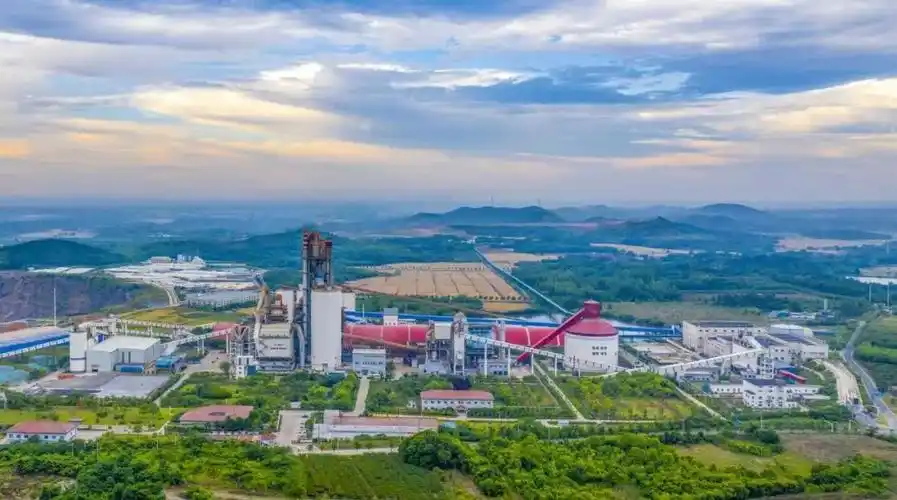
China Central Television (CCTV) recently showcased Huaxin Diwei Cement to demonstrate how traditional heavy industry can achieve deep decarbonization through circular economy practices.
Operating a legacy production line originally built in 1971, Huaxin Diwei has delivered a national record for Thermal Substitution Rates (TSR) in retrofitted cement kilns.
CCTV featured this milestone project to emphasize how alternative fuel co-processing transforms environmental compliance into operational efficiency.
Behind this national recognition is a full turnkey RDF/SRF pre-processing system designed and manufactured by Harden Machinery.
| 1. Multi-Source Solid Waste Streams | 2. Harden Fine shredding & Separation System | 3. High-Quality RDF/SRF |
| 4. Reduced CO₂ Emissions& Lower Coal Dependency | 5. Sustained 58-65% TSR Kiln-Tail Displacement | 6. Cement Kiln Co-processing |
Why Is Fuel Pre-Processing Critical for Cement Kiln Alternative Fuel Applications?
Cement manufacturing is one of the highest carbon-emitting industrial sectors globally. Replacing fossil fuels with alternative fuels (AFR) is the primary pathway to achieving corporate "Net-Zero" targets and meeting strict carbon regulations.
However, co-processing untreated, heterogeneous waste directly in a cement kiln creates severe operational risks. Raw waste causes flame instability, temperature fluctuations, material build-up, and unplanned kiln shutdowns.
Definition: Alternative fuel pre-processing is the mechanical homogenization of solid waste—converting diverse materials like industrial plastics, textiles, packaging, and biomass into standardized RDF/SRF with controlled particle size and calorific value.

How Harden's Turnkey System Delivers Environmental and Economic Benefits
Harden’s custom-engineered pre-processing line processes complex solid waste streams into high-calorific, low-impurity RDF/SRF.
By serving as the critical bridge between raw waste streams and stable kiln firing, the system delivers three primary advantages:
1. Drastic Reduction in Coal Consumption
By replacing fossil coal with high-quality RDF/SRF, cement manufacturers significantly lower their primary energy costs and reduce exposure to volatile coal market prices.
2. Deep Carbon Footprint Reduction
Alternative fuel co-processing diverts combustible waste from landfills and directly cuts fossil-based carbon emissions per ton of clinker produced.
3. High Thermal Substitution Rates (TSR)
With Harden’s fine shredding, windshiftering, and magnetic extraction technology, the output RDF meets strict grain-size and calorific requirements, allowing calciner fossil-fuel displacement to exceed 95%.

Frequently Asked Questions (FAQ)
Why is pre-shredding necessary before feeding waste into a cement kiln?
Directly feeding bulk waste causes thermal fluctuations, burner blockages, and unstable clinker quality. Pre-shredding ensures uniform particle size (~30 mm), allowing instant and complete combustion inside the calciner.
How does Harden help cement plants achieve higher TSR?
Harden provides fully integrated, turn-key pre-processing solutions—including heavy-duty shredders, magnetic separators, air classifiers, and homogenization systems—tailored to process diverse waste types into clean, high-value alternative fuel.

About Harden
Harden is a global technology leader specializing in solid waste shredding and alternative fuel (RDF/SRF) preparation systems.
With over a decade of solution engineering experience, Harden empowers cement manufacturers, waste-to-energy operators, and industrial clients worldwide to drive decarbonization, lower energy costs, and advance circular economy targets.
