

30% Higher Margins in RDF: The Power of One-Step Shredding
Everyone is chasing cost cuts—so why is this RDF plant delivering 30% higher margins?
This is the hidden ledger behind Harden’s “one-step” solution: not just cost savings, but a strategic lever to capture finished-product premium. As the industry shifts from high-margin to low-margin operations, the competition is no longer about installed capacity—it’s about unit production cost and product value.

In today’s waste-to-resource sector, “cost reduction and efficiency gains” are overused clichés. Many operators cut CAPEX upfront, only to face escalating OPEX—feedstock handling, transport, energy, maintenance—within the first year.

The result? Savings on equipment are quickly swallowed by unplanned downtime, high electricity bills, and underperforming RDF prices.
True Total Cost of Ownership (TCO) isn’t defined by how much you save—but by how much you earn.
01 The overlooked profit lever
Same waste, +$1.40/tonne more revenue
Most TCO analyses fixate on costs (power, labour), while ignoring revenue variability. Market research reveals a critical insight:
Premium for high-quality RDF: ~5%–10%
Why does this premium exist?
Legacy process limitations:
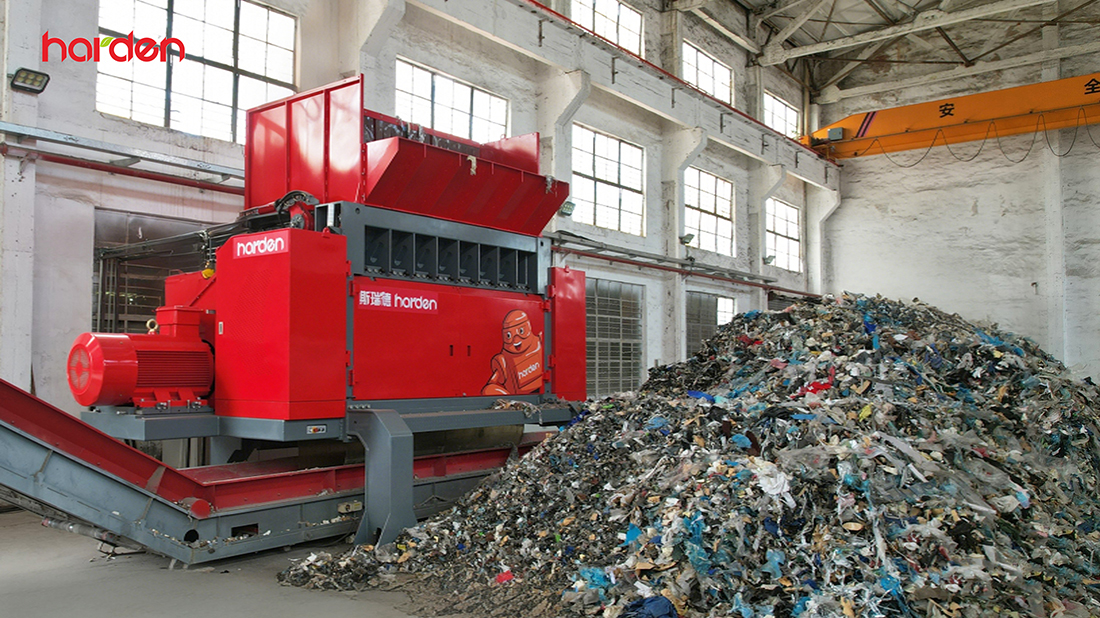
Conventional dual-shaft shredders lack effective screening. As blades wear, oversized and elongated fractions enter the output stream.
These “off-spec” materials cause blockages and incomplete combustion in cement kilns or power plants—leading to price penalties or rejected loads.
Harden’s solution:
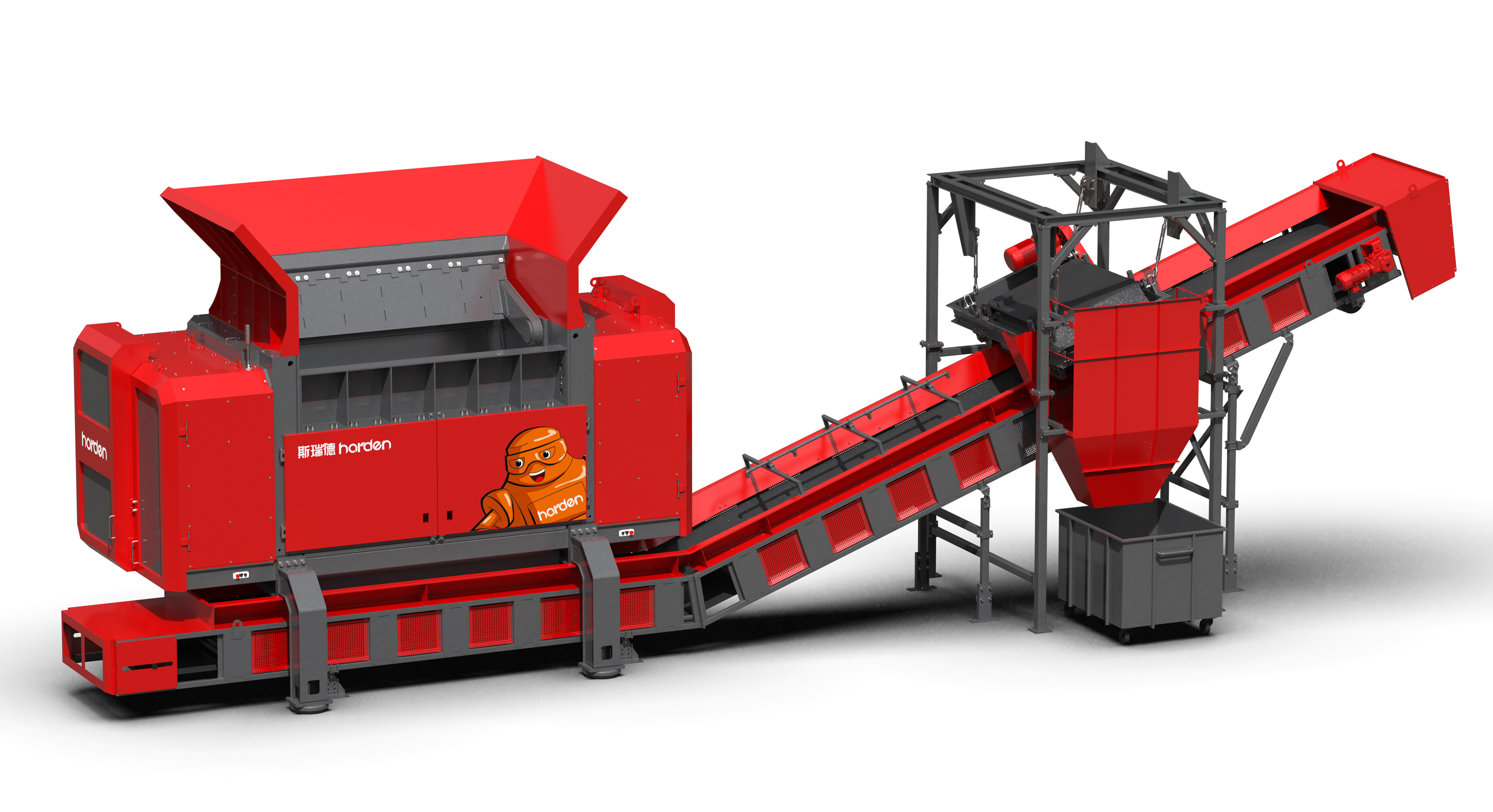
The SG3000MP integrates a hexagonal screen and intelligent feed control, acting as a built-in quality gate. Only calibrated fractions (e.g. 40–130 mm, adjustable) pass through.
With >95% product conformity, RDF becomes a high-demand, price-resilient commodity.
Commercial impact:
At 50,000 t/year capacity, a modest $1.40/tonne price uplift translates into ~$70,000 additional annual revenue—often exceeding energy savings.
02 Built for “Chinese waste reality.”
10-minute recovery vs. 24-hour downtime
Imported systems often underperform; low-end domestic lines frequently stall. The root cause is straightforward:
feedstock complexity—metals, rebar, bulky textiles—especially in C&D and legacy waste streams.
A key industry truth:
System reliability is the product of all component reliabilities.
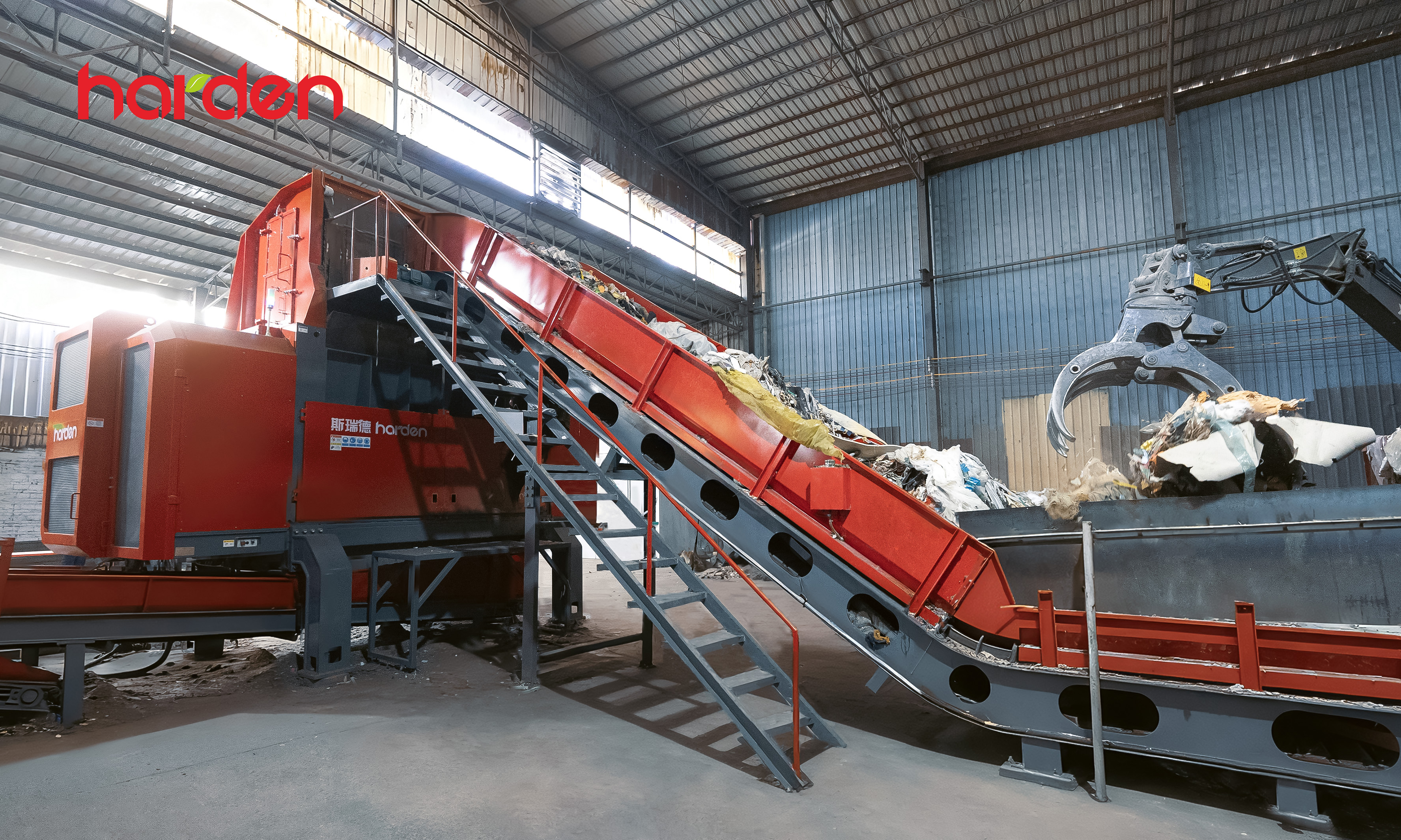
Traditional three-stage systems involve multiple shredders and conveyors. More equipment means: More failure points
Higher maintenance frequency (conveyors alone: 3–5 repairs/year)
Severe downtime when contaminants reach fine shredding stages (blade damage can halt operations for 24+ hours)
SG3000MP design philosophy: “Occam’s Razor.”
If one machine can do the job, don’t deploy three.
Key engineering features:
Intelligent foreign object protection:
Automatic clutch disengagement + sensor-triggered shutdown to protect core components
Hydraulic discharge door (external opening):
One-touch operation for rapid removal of contaminants—no dismantling required
Operational result:
From detection to restart: <10 minutes, with minimal blade wear.
While competitors are repairing, your line keeps producing.
03 The TCO breakdown
Every cost centre, optimised
Rather than quoting absolute figures, here are verified cost reductions from a real 50 kt/year RDF plant:
1. Energy consumption ↓ ~20%
Traditional systems: idle running across multiple machines → high parasitic load
SG3000MP: variable frequency drive + high-torque design → energy supplied on demand
Result: ~20% lower energy cost per tonne
2. Blade maintenance ↓ ~40%
Traditional systems: multiple blade types, complex servicing, costly failures
SG3000MP: multi-row angular cutters, reversible inserts (4 usable edges)
Result: ~40% lower blade cost per tonne
3. Footprint & civil works ↓ 82.5%
Traditional line: ~600 m²
SG3000MP: ~100 m²
This delivers:
Significant savings on rent
Reduced conveyor infrastructure
Lower electrical investment (cabling, transformers)—saving tens of thousands of RMB (~$3,000–$7,000) upfront
The bottom line
In the “second half” of the RDF industry, success is defined by:
Lower unit production cost
Stronger operational resilience
The SG3000MP one-step shredding system is not equipment stacking—it’s process simplification combined with value maximisation.
Annual impact (excluding depreciation):
OPEX savings: tens of thousands USD (energy, blades, rent)
Additional revenue from the RDF premium
Total incremental value: potentially exceeding $140,000/year
One machine = one plant
This is not marketing rhetoric—it’s a structural shift in how RDF facilities are engineered.
Harden’s one-step system is your entry point into a high-margin, risk-resilient RDF operation model.
