

100,000 Tonnes Per Year! A Major Southwest Cement Producer's RDF Plant Successfully Enters Operation
In the green transition of the cement industry, Refuse-Derived Fuel (RDF) and Alternative Fuels (AF) have evolved from niche waste solutions to core strategic tools, offering the dual advantage of carbon reduction and coal substitution.

To meet the demanding requirements for large-scale, stable co-processing in cement kilns, the project fully integrated Harden Industries' high-calorific RDF preparation system.
The system processes complex, mixed industrial solid waste into a highly homogeneous, high-calorific alternative fuel, seamlessly bridging industrial waste management with low-carbon cement production.
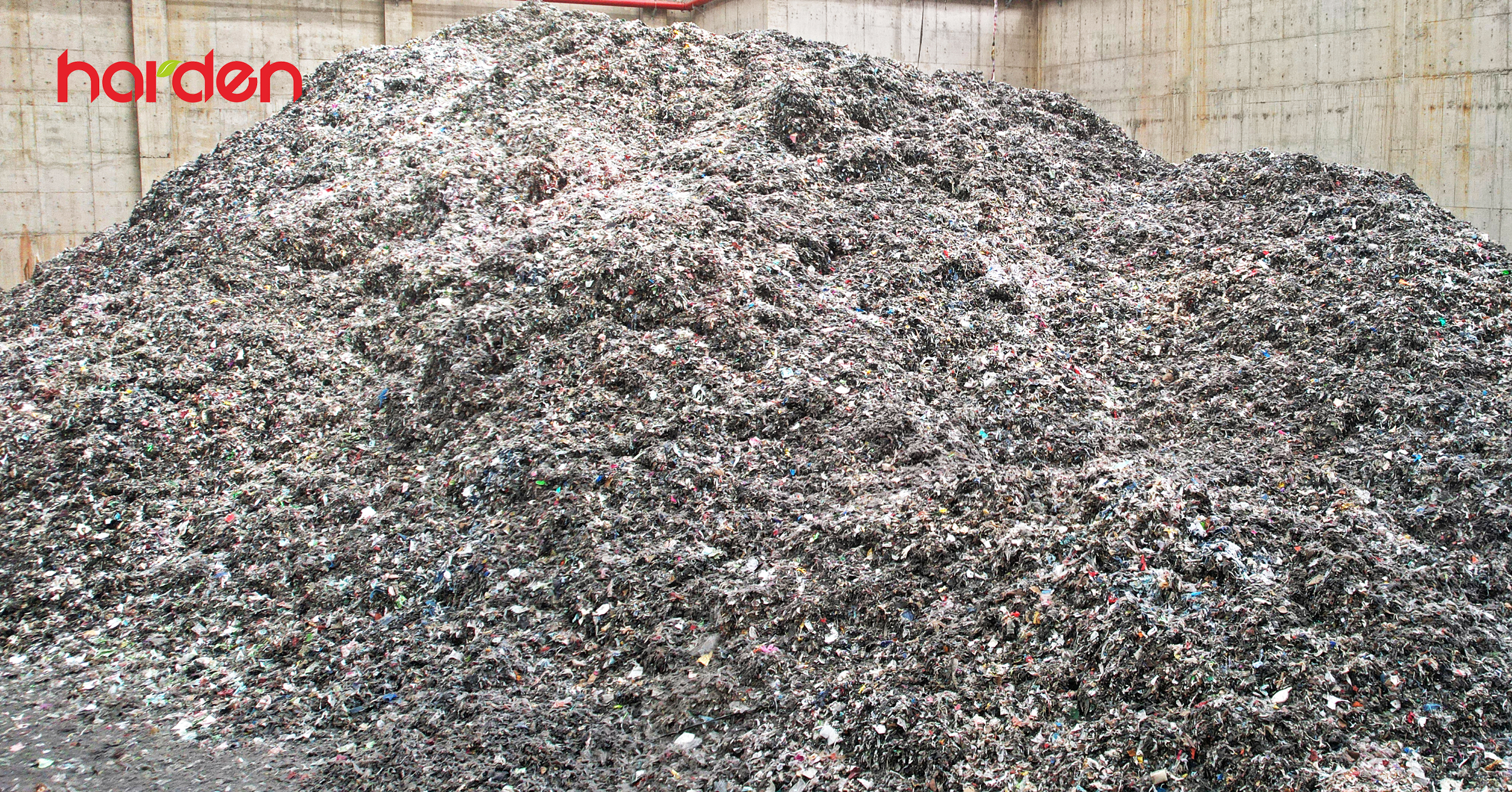
Key Benchmarks of a Modern RDF Plant
Regional Circular Economy: Diverts over 100,000 tonnes of regional industrial waste from landfills annually, significantly mitigating soil footprint and environmental risks for the local community.
Broad Material Versatility: Efficiently processes highly diverse input streams, including mixed industrial solid waste, textile leftovers, and leather scraps, regardless of variations in material thickness and composition.
Premium Specification Output: Employs a multi-stage fine-shredding and screening process to yield high-quality RDF at ~50mm, perfectly matching the strict feeding standards of modern cement kilns.
Smart AI Integration: Utilizes automated multi-equipment orchestration, energy recovery systems, and adaptive material feeding. This ensures continuous, large-scale production, reducing unscheduled downtime by 50% while boosting overall efficiency by 26%.
Proven Environmental & Financial ROI: Once fully operational, the plant is projected to substitute over 60,000 tonnes of coal annually, cutting carbon emissions by tens of thousands of tonnes.

Scalability Meets Precision: The Core Technology Inside
1. The Heavy-Duty Workhorse: Double-Shaft Shredder (Primary Stage)
Variable Torque: Dynamically adjusts to incoming material, effortlessly handling complex streams containing mixed metals and tough solid waste.
Energy Recovery & Smart AI: Minimizes power consumption per tonne and reduces the need for manual intervention.
Volume Reduction: Rapidly downsizes bulky waste to prepare a optimal baseline for down-stream fine-shredding and separation.

2. The Fine-Shredding Specialist: Single-Shaft Shredder (Secondary Stage)
Adaptive Processing: Engineered specifically for high-tenacity materials like textiles and mixed polymers.
AI-Driven Hydraulics: Intelligently monitors internal load to ensure continuous, full-capacity operation while maximizing throughput.
Precision Sizing: Integrated bottom screens lock in output specifications at ~50mm, achieving a compliance rate above 95%.
This synchronized, multi-equipment setup guarantees uniform particle size and a consistent calorific value, ensuring cement kilns burn steadily and cost-effectively.

The Global Context: The Industrial Shift to Alternative Fuels
Leading cement manufacturers are rapidly accelerating their investment in RDF projects, shifting from technology trials to large-scale capacity deployment. Market intelligence highlights the scale of this transition:
Market Growth: The global cement kiln co-processing fuel market is projected to reach $6.3 billion by 2032, growing at a CAGR of 5.6%.
Primary Consumer: Cement kilns are the single largest consumer of RDF globally, accounting for over 50% of total consumption and reducing clinker production costs by €1.30–€2.00 per tonne.
Industry Standards: With carbon pricing rising and environmental audits tightening, market leaders like Conch, Huaxin, and Red Lion are progressively pushing their RDF substitution rates beyond 20%.
Converting municipal and industrial waste into energy creates a viable "waste-to-fuel" synergy. Against the backdrop of maturing carbon markets, this approach delivers immediate, tangible dividends in both coal savings and carbon credits.
Summary
The launch of this 100,000-tonne facility reflects a broader trend across the entire sector. RDF is fundamentally rewriting the financial and environmental ledger for cement producers. This plant stands as a clear blueprint for the industry's sustainable future.
